
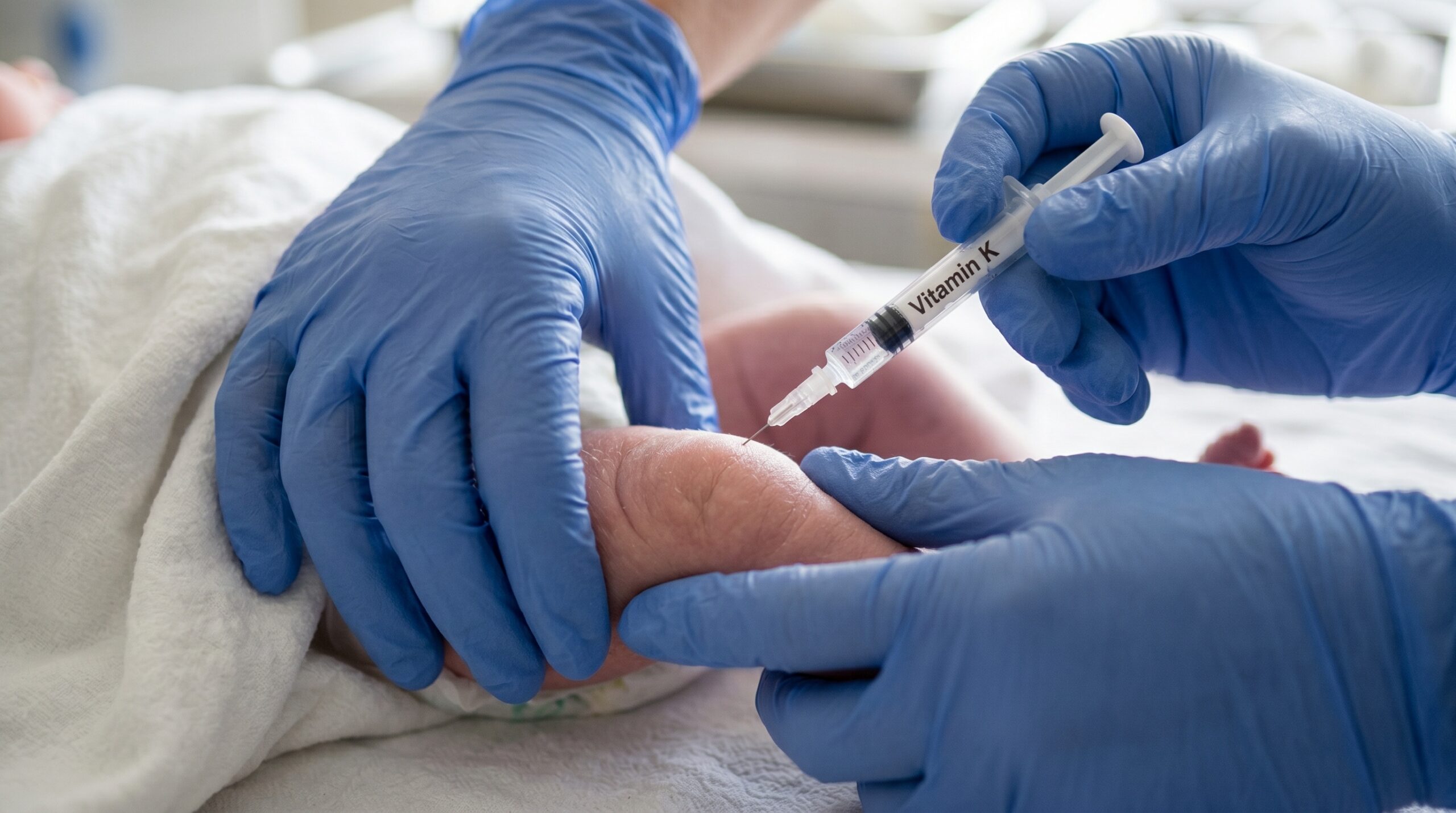
A routine vitamin K shot shortly after birth prevents life-threatening bleeding in newborns.
But recent reporting from The New York Times highlights a concerning trend: more parents are declining this lifesaving injection.
The article describes infants who have had severe brain and abdominal bleeding after not receiving vitamin K after birth, resulting in permanent injury and, in some cases, death. It also reports that 5.2% of babies in the United States did not receive vitamin K in 2024, up from 2.9% in 2017.
The Benefits of Vitamin K
Vitamin K is essential for blood clotting, but newborns are born with very low levels and cannot get enough of it from breastmilk or formula. Without enough vitamin K, an otherwise healthy infant can experience sudden and potentially life-threatening bleeding. A single shot shortly after birth can nearly eliminate the risk of bleeding from vitamin K deficiency.
The National Coalition for Infant Health supports the American Academy of Pediatrics’ recommendation that all newborns receive a vitamin K shot shortly after birth. This long-standing standard of care has protected infants for decades from this devastating and preventable condition.
Raising Awareness During Pregnancy
The increase of parents declining the shot points to the need for clear and respectful communication with families.
Parents should understand that the vitamin K shot is not a vaccine, why newborns need it and the risks of declining it. Whenever possible, these conversations should begin during pregnancy, so families have time to ask questions and receive accurate information before delivery.
Parents who have concerns about vitamin K are trying to make the best decision for their child. Health care providers should take those concerns seriously, respond with empathy and clearly explain the evidence.
Vitamin K deficiency bleeding is preventable, and families deserve the clear information and trusted clinical guidance they need to protect their newborns.